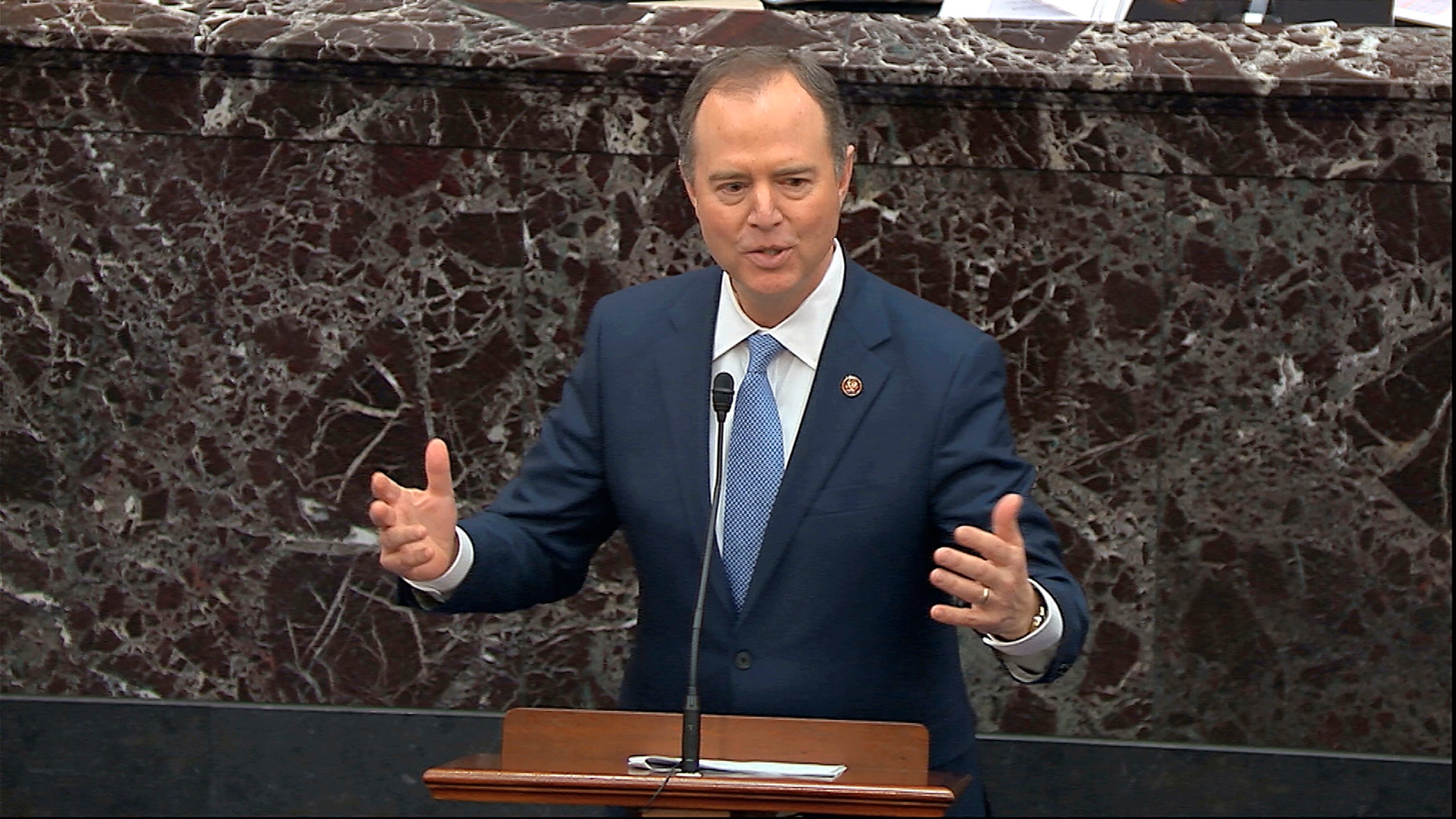
WASHINGTON – The rules and general procedures outlining how the impeachment trial of President Donald Trump will move forward were set with the passage of a resolution along party lines after a marathon Senate session that stretched into early Wednesday.
Democrats put forward 11 amendments that would have issued subpoenas to current former Trump administration officials, and to various government entities for relevant documents and information. All were defeated in the Republican-controlled Senate.
The resolution calls for opening statements to begin Wednesday at 1 p.m. Both sides will have 24 hours over three to days to argue the case.
Senate trial of President Donald Trump updates: House Democrats argue their case
Here's at what happened Tuesday ahead of the eventual passage of the resolution:
Moderate Republicans pushed for McConnell to tweak resolution
Senate Majority Leader Mitch McConnell, R-Ky., originally proposed allowing the House managers prosecuting the case and Trump's defense team 24 hours over two days to present their cases. McConnell's first version of the resolution also did not automatically enter evidence gathered by the House into the Senate’s record.
Sen. Susan Collins, R-Maine joined Democrats in criticizing the resolution and led a push to change to McConnell's proposal to more closely mirror the format of the 1999 impeachment trial of former President Bill Clinton. She said the final version was a "significant improvement."
What happens now?: How the Senate impeachment process works
Witnesses still a possibility
After the House managers and the president's defense team present their cases, the resolution gives senators 16 hours to ask questions. At that point, they can vote to issue subpoenas for new witnesses or documents them deem necessary.
Democrats argued it made more sense to hear from witnesses and to see new evidence before the case was presented.
Some Republicans opposing the amendments from Minority Leader Chuck Schumer, D-N.Y., that called for subpoenas now said that step should have been taken by the House during the impeachment inquiry. Others, like Collins, said they should vote on the subpoenas later because that was how it was done in the Clinton trial.
Roberts admonishes both sides
Chief Justice John Roberts admonished both the House managers and the president’s counsel after a fiery back-and-forth debating whether former national security adviser John Bolton should be subpoenaed to testify before the Senate.
"Those addressing the Senate should remember where they are," Roberts told them. He reminded them to "use language conducive to civil discourse."
Chief Justice John Roberts: His role in impeachment? Speak softly, set a good example
Collins votes with Democrats on one amendment
Every amendment put forward by Schumer was rejected along the same 47-53, party-line vote – except one.
Collins voted with Democrats on the 10th amendment proposed by Schumer, which would have allowed more time for both sides to respond to trial motions.
The lack of defections was a victory of McConnell who could not lose more than three senators to block the Democratic amendments.
Want to talk more about politics?: Join our Facebook group: ‘Across the Aisle, Across the Nation.’
https://news.google.com/__i/rss/rd/articles/CBMifmh0dHBzOi8vd3d3LnVzYXRvZGF5LmNvbS9zdG9yeS9uZXdzL3BvbGl0aWNzLzIwMjAvMDEvMjIvdHJ1bXAtc2VuYXRlLWltcGVhY2htZW50LXRyaWFsLXR1ZXNkYXktbWNjb25uZWxsLXJ1bGVzLXNldC80NTM5NzI0MDAyL9IBJ2h0dHBzOi8vYW1wLnVzYXRvZGF5LmNvbS9hbXAvNDUzOTcyNDAwMg?oc=5
2020-01-22 12:56:02Z


Tidak ada komentar:
Posting Komentar